One of the biggest reasons people book a jeep safari in Rajaji National Park is the opportunity to see wild animals in their natural habitat. Visitors often hope to spot an Asian elephant, leopard, spotted deer or even a Bengal tiger during their journey through the forest.
But an important question comes before booking: Is wildlife sighting guaranteed in Rajaji National Park?
The simple answer is no. Rajaji National Park is a natural wildlife habitat, not a zoo. Animals move freely through forests, grasslands and river corridors, and their movements cannot be predicted for every safari.
Some visitors may encounter elephants or deer, while others may mainly experience birds, animal tracks, forest landscapes and the sounds of nature.
This guide explains what affects wildlife sightings in Rajaji, what animals you may encounter and how to make the most of your safari, even if you do not see a large animal.
Is Wildlife Sighting Guaranteed in Rajaji National Park?
No, wildlife sightings are not guaranteed during a Rajaji National Park jeep safari.
Animals live freely in their natural surroundings and are not kept in specific locations for visitors. Their movement depends on several natural factors, including:
- Weather and temperature
- Season and availability of water
- Food availability
- Natural animal behaviour
- Forest conditions
- Time of day
- The safari route and habitat
Even if an animal was spotted in a particular area on the previous day, there is no guarantee that it will appear at the same location during your safari.
A responsible safari operator or guide should never promise a confirmed tiger, leopard or elephant sighting.
The purpose of a wildlife safari is to explore the forest and observe nature responsibly, not to guarantee an encounter with a particular animal.
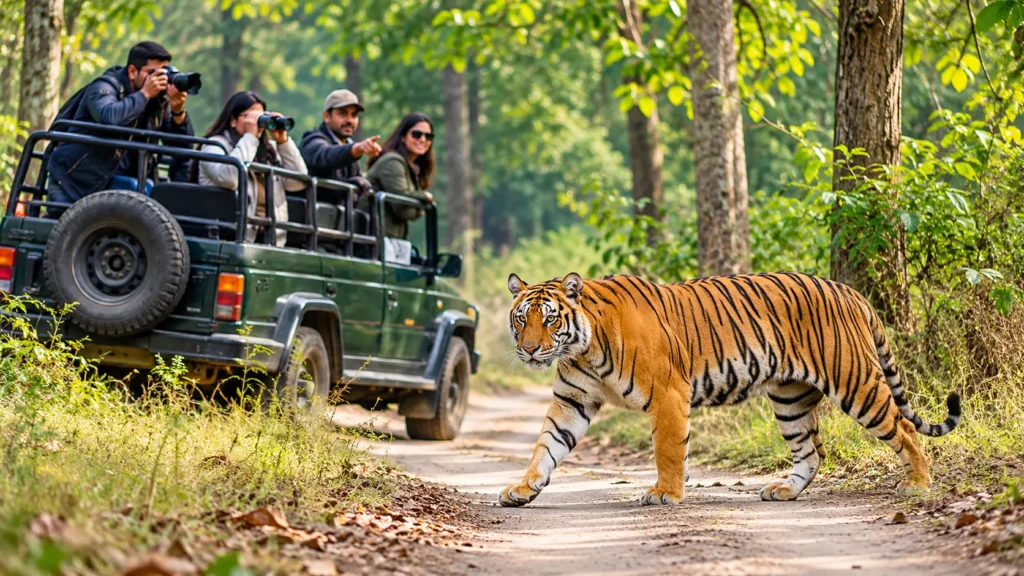
Can You See Tigers in Rajaji National Park?
Yes, Bengal tigers are part of the wildlife population of the wider Rajaji Tiger Reserve. However, spotting one during a jeep safari can be difficult.
Tigers are naturally elusive animals. They spend much of their time moving through forest habitats, resting in cover or remaining away from human activity.
Even when a tiger is present in the wider reserve, it may not cross the particular safari route during your visit.
Visitors should therefore treat a tiger sighting as a possibility rather than an expectation.
If your main reason for visiting Rajaji is to see a tiger, keep realistic expectations and enjoy other wildlife experiences as well.
Can You See Elephants During a Rajaji Safari?
Asian elephants are an important part of Rajaji’s wildlife landscape.
The reserve has forest areas, grasslands and river corridors that support elephant movement. Depending on natural conditions and the safari route, visitors may get an opportunity to observe elephants.
However, elephant sightings are not guaranteed either.
Elephants may move in groups, remain in forest cover or use different parts of their habitat depending on food, water and other environmental conditions.
If you encounter elephants, maintain a safe distance and follow the instructions of your authorised guide and driver. Never ask anyone to approach, chase or disturb them for photographs.
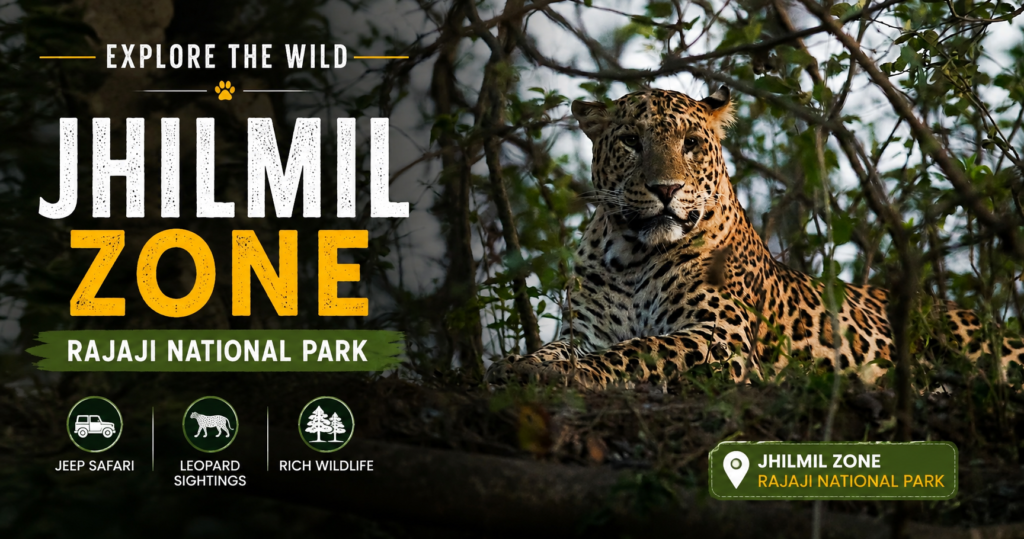
Are Leopard Sightings Common in Rajaji National Park?
Leopards are found in suitable habitats across the wider Rajaji landscape, but they are among the more difficult animals to spot.
They are generally elusive and can remain hidden in dense vegetation or rocky and forested areas.
A leopard may cross a safari track unexpectedly, but visitors should not expect to see one on every trip.
Some safari areas offer opportunities to explore habitats where leopards occur. However, the presence of suitable habitat does not mean a sighting is certain.
The best approach is to observe the forest patiently and avoid treating any particular zone as a guaranteed leopard-sighting location.
Which Animals Can You See During a Rajaji National Park Safari?
Although tiger and leopard sightings receive considerable attention, Rajaji offers opportunities to observe several other types of wildlife.
Depending on the area, season and natural conditions, visitors may encounter:
| Wildlife | What visitors may experience |
|---|---|
| Asian Elephant | Elephants moving through forest and grassland habitats |
| Spotted Deer (Chital) | Deer feeding or moving in open areas |
| Sambar Deer | Larger deer using forest edges and wooded habitats |
| Barking Deer | Shy deer found in suitable forest areas |
| Wild Boar | Animals moving through forest undergrowth |
| Hanuman Langur | Groups resting or feeding in trees |
| Indian Peafowl | Colourful birds around forest edges |
| Hornbills | Large forest birds in suitable habitats |
| Kingfishers | Birds near rivers and water bodies |
| Woodpeckers | Birds searching for insects on tree trunks |
These are possible wildlife encounters, not a list of animals guaranteed on every safari.
For a more detailed species guide, read our article on Wildlife of Rajaji National Park.
What Factors Affect Wildlife Sightings in Rajaji?
Understanding the forest environment can help visitors develop realistic expectations.
1. Season and Weather
Wildlife movement changes with seasonal conditions.
Temperature, rainfall, water availability and food sources can influence where animals spend their time.
Different seasons may offer different wildlife-viewing experiences, but no season guarantees a particular animal sighting.
2. Safari Timing
Morning and afternoon safaris offer different light and weather conditions.
Early morning can be comfortable for exploring the forest, especially during cooler months. Afternoon safaris can offer a different view of the landscape as light and temperature change.
However, there is no fixed time when tigers, elephants or leopards must appear.
3. Natural Animal Movement
Wild animals do not follow a fixed timetable.
An elephant herd may move towards a water source, while a leopard may remain hidden in dense vegetation. Deer may appear in open areas and then disappear into the forest.
Their movements are influenced by natural behaviour rather than tourist schedules.
4. Habitat and Safari Route
Rajaji has different forest habitats, including Sal forests, grasslands, riverine areas and foothill landscapes.
The wildlife found in one habitat may differ from another. A safari route determines which parts of the forest visitors get to explore during their trip.
Choosing a zone according to your travel plans and preferred forest experience can be useful, but no zone can promise a specific sighting.
5. Weather and Visibility
Heavy rain, fog, strong sunlight and changing weather conditions can affect visibility.
Even when animals are relatively close, thick vegetation or poor light may make them difficult to observe.
Does Choosing the Right Safari Zone Improve Your Chances?
Choosing a safari zone helps determine the habitat and landscape you explore. However, it does not guarantee that you will see a particular animal.
Here is a brief overview of some well-known safari areas:
Chilla Zone
Chilla offers forest, grassland and riverine landscapes. It is a popular area for visitors exploring Rajaji from Haridwar and Rishikesh.
Visitors may look for elephants, deer and birds while exploring the authorised safari route.
Read more: Chilla Zone Safari Guide.
Motichur Zone
Motichur is another safari area within the Rajaji landscape. Its forest surroundings provide opportunities to explore natural habitats and observe wildlife.
Animal sightings depend on local conditions and movement.
Mohand Range
The Mohand and Chillawali landscape offers a quieter forest experience on the Dehradun side of Rajaji.
Visitors may look for forest birds, deer and other wildlife while travelling through authorised routes.
Read more: Mohand Range Jungle Safari.
Jhilmil Jheel
Jhilmil Jheel is known for its wetland and grassland surroundings. It offers a different habitat experience from the more densely forested safari areas.
Birdwatching and observing the natural landscape can be interesting activities here.
Important: Safari access, zone availability and operating rules are subject to Forest Department permissions. Always confirm current availability before booking.
How to Improve Your Wildlife Safari Experience
Although you cannot control whether an animal appears, you can prepare for a more rewarding safari.
1. Listen to Your Guide
An authorised guide can help you understand the forest environment, identify bird calls and notice signs of animal movement.
Ask questions about tracks, calls and the surrounding habitat rather than focusing only on large animals.
2. Stay Quiet
Loud conversations, music and sudden movements can disturb wildlife and affect the experience of other visitors.
Keep your phone on silent and follow the guide’s instructions.
3. Observe the Forest Carefully
Do not look only for tigers and elephants.
Pay attention to birds, butterflies, trees, riverbeds, animal tracks and changes in the forest landscape.
These smaller details can make the safari interesting even without a major wildlife encounter.
4. Carry Binoculars
Binoculars can help you observe birds and distant wildlife without approaching them.
They are particularly useful when looking towards tree branches, open grasslands and riverbanks.
5. Be Patient
Wildlife observation requires patience.
Avoid expecting animals to appear at a particular location or time. Give yourself the opportunity to enjoy the complete forest experience.
What If You Do Not See Any Animals During Your Safari?
It is possible to complete a safari without seeing a large mammal.
That does not necessarily mean your trip was unsuccessful.
A safari is an opportunity to explore a natural forest environment. You may still experience:
- Beautiful forest landscapes
- Bird calls and birdwatching opportunities
- Riverbeds and seasonal streams
- Natural vegetation and trees
- Animal footprints or other signs of wildlife
- Interesting information from your guide
Every safari is different because the forest environment and animal movements keep changing.
Visitors should understand that the absence of a particular animal sighting is not normally a reason to expect compensation or a refund. Always review the cancellation and refund terms that apply to your specific booking.
Can a Safari Operator Guarantee Tiger or Elephant Sightings?
No responsible operator should promise a guaranteed wild animal sighting.
An operator can help arrange a safari vehicle, permits and other services according to applicable rules. A guide can also share knowledge about the forest and help visitors observe their surroundings.
However, no operator controls the natural movement of wild animals.
Be careful with advertisements or booking offers that promise a 100% tiger, leopard or elephant sighting.
Before confirming a booking, ask about:
- The selected safari zone
- Safari date and timing
- Vehicle and permit inclusions
- Guide arrangements
- Reporting location
- Cancellation and refund conditions
A clear booking confirmation is more useful than an unrealistic wildlife-sighting promise.
Frequently Asked Questions About Wildlife Sightings in Rajaji National Park
1. Is tiger sighting guaranteed in Rajaji National Park?
No. Tigers live in the wider Rajaji Tiger Reserve, but they are elusive and move freely through their natural habitat. A tiger sighting cannot be guaranteed during any particular safari.
2. What are the chances of seeing elephants in Rajaji National Park?
Elephants are an important part of the Rajaji landscape, and visitors may encounter them in suitable habitats. However, their movement is natural and unpredictable, so no fixed sighting probability can be provided.
3. Can I see a leopard during a Rajaji jeep safari?
Leopards occur in suitable habitats across the reserve, but they are difficult to spot. A sighting is possible, not guaranteed.
4. Which Rajaji safari zone is best for wildlife sightings?
Different zones offer different habitats and safari experiences. No zone can guarantee a tiger, leopard or elephant sighting. Choose according to your travel location, access availability and preferred landscape.
5. Is morning safari better for wildlife sightings?
Morning safaris offer cooler conditions and can be comfortable for wildlife observation. However, animal activity varies naturally, and morning safaris do not guarantee more sightings than afternoon safaris.
6. What happens if I do not see a tiger during my safari?
You can still enjoy the forest landscape, birds, other wildlife and the information shared by your guide. A tiger sighting is not a guaranteed part of the safari experience.
7. Can a safari guide help locate animals?
An experienced authorised guide can help visitors identify animal tracks, calls, habitat features and signs of wildlife movement. However, a guide cannot control or guarantee animal sightings.
8. Should I book a second safari if I do not see any animals?
A second safari gives you another opportunity to explore a different route or experience different natural conditions. However, another safari also cannot guarantee a wildlife sighting.
Final Thoughts
Rajaji National Park offers a valuable opportunity to experience wildlife in its natural surroundings. From Asian elephants and deer to elusive leopards, tigers and colourful forest birds, the reserve has a diverse natural environment.
However, wildlife sighting in Rajaji National Park is never guaranteed. Animals move according to their own behaviour, habitat conditions, weather and seasonal changes.
Instead of planning your entire trip around seeing one particular animal, enjoy the complete safari experience. Observe the forest, listen to bird calls, learn from your guide and respect the natural environment.
The best wildlife safari is one where nature is allowed to decide what you see.
Planning your visit? Explore our Rajaji National Park Safari Booking Guide and check the latest availability before travelling.