Search around for the wildlife of Rajaji National Park and you’ll quickly notice something odd: the numbers don’t agree. One source will tell you the park has around 400 elephants and 37 tigers, another will cite 500-plus elephants and 50-plus tigers. Neither is necessarily “wrong” — wildlife counts are periodically updated through Forest Department census cycles, and older figures linger online long after newer ones are published. What matters more for a visitor is understanding which animals you’re actually likely to see, in which zones, and how realistic each sighting is. That’s what this guide covers.
The Big Picture: What Kind of Park Is This?
Rajaji spans roughly 820 sq km of Shivalik forest across Haridwar, Dehradun and Pauri Garhwal, mixing dense sal forest, open grassland and the Ganga’s riverine belt. That habitat variety is exactly why the wildlife of Rajaji National Park is so broad — you’re not just looking at one forest type, but three distinct ecosystems stitched together, each supporting different species.
Bengal Tiger
Rajaji was declared India’s 48th Tiger Reserve in 2015, and its tiger population, while smaller than more established reserves like Corbett, has been growing steadily. Tigers are present but genuinely elusive — sightings are a real possibility, especially in Chilla zone on morning safaris, but they’re not something any honest operator should promise you. Think of a tiger sighting here as a highlight rather than a guarantee, and you’ll enjoy the safari either way.
Asian Elephant
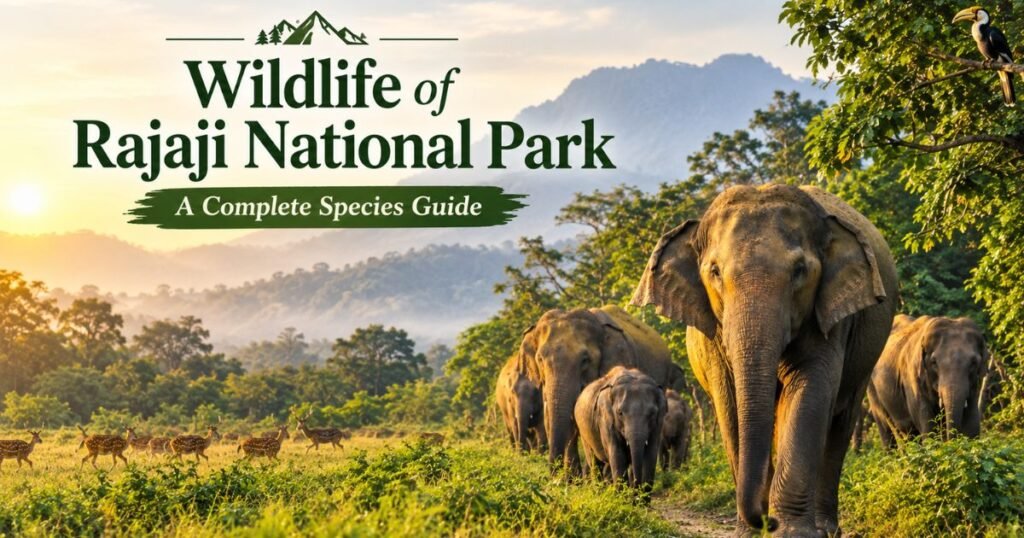
This is Rajaji’s real signature species. The park is home to one of North India’s largest wild elephant populations, and it forms a critical part of the Shivalik elephant corridor connecting Rajaji to the wider regional landscape. Elephant sightings are considerably more frequent and reliable than tiger sightings, particularly in the Motichur and Ranipur zones, where herds move through sal woodland and dry riverbeds on a regular pattern. If you see one animal on your Rajaji safari, statistically it’s most likely to be an elephant.
Leopard
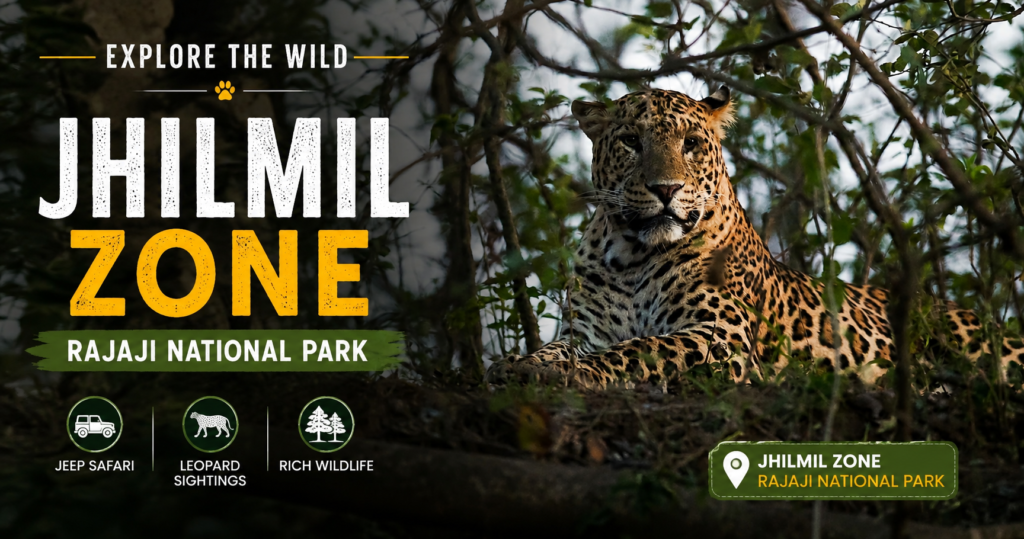
Leopards are present throughout the park but are even more elusive than tigers, largely due to their solitary, often nocturnal habits. Sightings do happen, generally as a quick glimpse rather than an extended viewing, and tend to be reported more from Chilla and the Gohari/Ramgarh range.
Sloth Bear
Less commonly discussed than the park’s headline species, sloth bears are present in Rajaji’s forest habitat. They’re shy and generally avoid open areas during safari hours, making sightings rare, but their presence adds to the park’s overall biodiversity.
Spotted Deer (Chital)
One of the most commonly and reliably sighted animals across nearly every zone. Spotted deer move in herds through grassland and forest edges and are often the first wildlife you’ll encounter on a safari, well before any larger predator or elephant sighting.
Swamp Deer (Barasingha)
This is Jhilmil Jheel’s signature species and a genuine rarity — swamp deer are found in far fewer locations across India than spotted deer, making Jhilmil Jheel a specifically important zone for anyone hoping to see them. If swamp deer are on your must-see list, Jhilmil Jheel isn’t just the best zone, it’s essentially the only realistic one within Rajaji.
Nilgai (Blue Bull)
India’s largest antelope species is commonly sighted in Rajaji’s open grassland areas, particularly in the quieter Gohari and Ramgarh range, alongside wild boar.
Wild Boar
Frequently spotted across most zones, especially near forest edges and grassland, though rarely the main highlight of a safari given how common the sighting is.
Gharial and Crocodile
The Ganga’s riverine belt running through the park supports gharials and crocodiles, best spotted from safari routes that run close to the river, particularly in and around the Chilla zone. These sightings depend heavily on route and timing, so they’re more of a bonus than something to specifically plan a safari around.
Reptiles: King Cobra and Other Species
Rajaji’s forest habitat also supports a range of reptiles, including king cobras, though sightings of snakes specifically are uncommon on a standard jeep safari, since most species avoid open vehicle tracks during daylight hours.
Birdlife
The wildlife of Rajaji National Park extends well beyond mammals — the park records well over 400 bird species, with Jhilmil Jheel standing out as the premier birding zone thanks to its wetland habitat. Expect sightings ranging from great hornbills to migratory waterfowl and painted storks, particularly in the cooler months when migratory species are present.
Realistic Sighting Expectations, Zone by Zone
- Chilla: Highest overall sighting frequency for tigers, elephants and leopards; also good for gharial/crocodile sightings near the river.
- Motichur: Strong, consistent elephant movement; quieter than Chilla.
- Ranipur: Reliable elephant corridors; secluded, less-crowded grassland.
- Jhilmil Jheel: The place for swamp deer and birdlife; not a tiger-focused zone.
- Mohand/Chillawali: Dense, hilly terrain; more of an adventure-oriented drive than a guaranteed wildlife checklist.
- Gohari/Ramgarh: Leopard, nilgai and wild boar in a quiet, photographer-friendly setting.
Why the Population Numbers Vary Online
Wildlife population figures for any Indian tiger reserve are updated periodically through official census exercises, and different publications pick up different census years. A figure quoted from a 2018 count and one from a more recent Forest Department release will naturally look different, even though both were accurate at the time they were published. When researching the wildlife of Rajaji National Park, treat any specific population number as a snapshot in time rather than a fixed fact, and rely on your safari operator or the Forest Department’s most recent published figures for the most current count.
Frequently Asked Questions
Are there tigers in Rajaji National Park?
Yes, Rajaji has a genuine and growing tiger population, having been declared India’s 48th Tiger Reserve in 2015, though sightings are not guaranteed on any given safari.
Are there elephants in Rajaji National Park?
Yes, and elephants are the park’s most reliably sighted large mammal, with one of North India’s largest wild elephant populations, especially strong in the Motichur and Ranipur zones.
Which zone has the best chance of spotting a tiger?
Chilla zone generally has the highest tiger and elephant sighting frequency of Rajaji’s six zones.
Is Rajaji National Park good for birdwatching?
Yes, with over 400 recorded bird species, and Jhilmil Jheel wetland standing out as the best zone specifically for birding.
Are there crocodiles in Rajaji National Park?
Yes, gharials and crocodiles are present along the Ganga’s riverine stretch running through the park, most often spotted near Chilla zone’s river-adjacent routes.
Can I see swamp deer in Rajaji National Park?
Yes, but almost exclusively at Jhilmil Jheel, which is the park’s key habitat for this rare species.
Conclusion
The wildlife of Rajaji National Park is genuinely more varied than its “tiger reserve” label suggests — elephants, not tigers, are the park’s most consistent highlight, alongside a strong supporting cast of leopards, swamp deer, gharials and over 400 bird species spread across sal forest, grassland and riverine habitat. Match your zone choice to the species you most want to see rather than chasing a single “best” zone, and you’ll get a far more satisfying safari. Tell us what you’re hoping to spot on WhatsApp and we’ll recommend the zone and shift that gives you the best realistic chance.