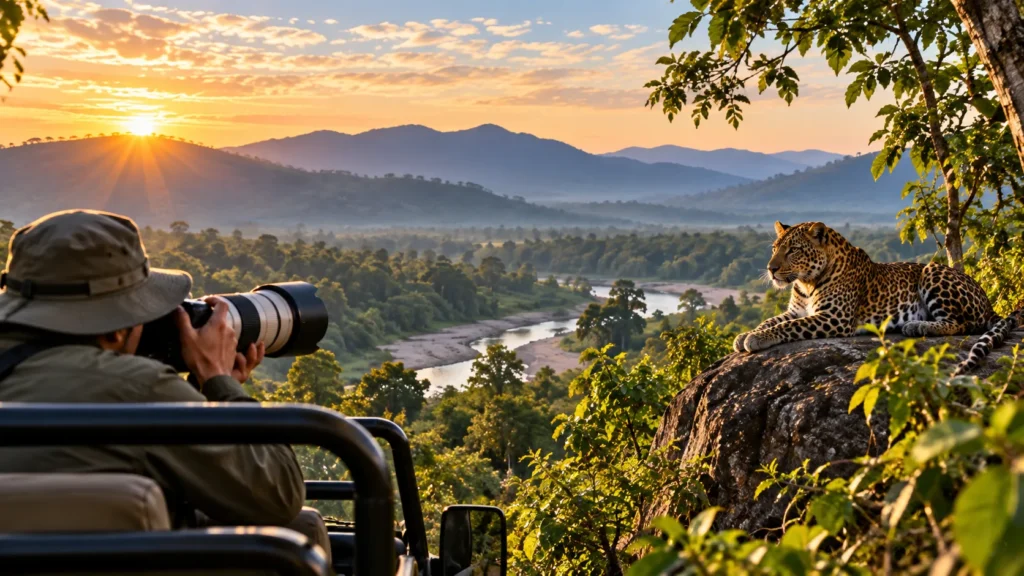
If you are looking for a wildlife photography experience in Uttarakhand, a Rajaji National Park Wildlife Photography Tour 2026 can be an opportunity to photograph elephants, deer, birds, forest landscapes and, with luck and patience, some of Rajaji’s larger carnivores.
Rajaji National Park sits in the Shivalik landscape of Uttarakhand and forms part of the wider Rajaji Tiger Reserve. Its forests, grasslands and riverine areas support species such as Asian elephants, leopards, tigers, deer and many birds.
For photographers, the attraction is not only a particular animal. The combination of forest, mountains, rivers, changing light and wildlife movement creates opportunities for both wildlife and landscape photography.
Why Choose Rajaji National Park for Wildlife Photography?
Rajaji offers a different photography experience from a safari focused only on checking off one particular animal.
The landscape includes dense forest, open areas, riverine habitat and mountain views. This gives photographers opportunities to work with different compositions throughout a safari.
Possible photography subjects include:
• Asian elephants
• Leopards
• Tigers
• Spotted deer
• Sambar
• Wild boar
• Langurs
• Birds
• Forest landscapes
• River and mountain scenery
A sighting is never guaranteed in a wild forest. The best approach is to treat every safari as a wildlife observation experience rather than expecting a particular animal to appear.
For a broader species guide, see our Rajaji National Park wildlife and animal guide.
What Makes a Rajaji Photography Safari Different?
A regular sightseeing safari and a dedicated photography safari do not necessarily have the same objective.
Photography-focused travellers generally want more time to observe animal behaviour, wait for better light, compose photographs, use longer focal lengths, photograph birds and smaller wildlife, and capture environmental shots.
This makes the experience particularly interesting for photographers who enjoy patience rather than simply trying to cover as many kilometres as possible.
Rajaji National Park Wildlife Photography Tour 2026 Dates
The regular Rajaji safari season is generally scheduled from 15 November to 15 June, with safari timings changing seasonally. For a dedicated photography trip, dates should be selected within the applicable safari season and confirmed against current zone availability.
The photography tour dates currently promoted for the 2026 programme include:
• 27 to 30 November 2026
• 4 to 7 December 2026
• 11 to 14 December 2026
• 18 to 21 December 2026
• 24 to 27 December 2026
These dates are for the advertised photography-tour programme and should be confirmed for availability before booking. Forest entry, safari availability and operating schedules remain subject to the applicable permissions and current forest department rules.
Before choosing your dates, check our Rajaji National Park safari season, dates and timings guide.
What Wildlife Can Photographers Expect?
Rajaji is particularly known for its elephant population, while leopards, tigers, deer and birds add further possibilities for wildlife photographers.
Elephants can provide opportunities for herd behaviour, mother-and-calf interactions, movement through open areas and riverbank scenes.
Leopards are more elusive and can remain hidden in vegetation. A dedicated photography trip can suit photographers who are interested in patiently searching for wildlife rather than expecting a guaranteed sighting.
Rajaji also offers opportunities for bird photography, particularly for photographers carrying suitable telephoto equipment.
Which Rajaji Safari Zone Should Photographers Choose?
Rajaji has several safari zones and access areas, and the most suitable option depends on your photography goals.
Your choice can be influenced by target wildlife, landscape preference, travel route, safari availability, current zone operating status and photography objectives.
If your main objective is wildlife variety, you may want to consider more than one zone rather than repeating the same route.
Read our Rajaji National Park Safari Zone Guide before deciding.
How Many Safaris Should You Do for Wildlife Photography?
There is no fixed number of safaris that guarantees good photographs.
One safari can produce a memorable photograph, while several safaris may pass without the exact sighting you hoped for.
For photography, multiple safari drives can provide more opportunities across different light conditions, routes, wildlife species and photographic compositions.
What Camera Gear Should You Carry?
You do not need the most expensive camera to enjoy photography in Rajaji.
A practical wildlife photography kit can include:
• DSLR or mirrorless camera
• Telephoto lens
• Wide-angle lens
• Extra batteries
• Multiple memory cards
• Lens cleaning cloth
• Binoculars
• Suitable vehicle support
• Rain protection where appropriate
A telephoto lens is particularly useful because it allows you to photograph wildlife from a safe distance. Avoid carrying unnecessary equipment that makes movement inside the safari vehicle difficult.
Best Time for Wildlife Photography in Rajaji
The best period depends on the type of photography you want.
November to February: Cooler conditions and softer winter light can make these months comfortable for photography.
March to April: The landscape begins changing as temperatures rise, creating different wildlife and landscape conditions.
May to mid-June: Hotter conditions can change animal movement and may create opportunities around available water sources, although the heat can be challenging.
The exact safari timings also change during the season, so always confirm the schedule applicable to your travel date.
What Is Included in a Rajaji Photography Tour?
The exact inclusions depend on the tour package you book.
The 2026 photography tour currently promoted for the listed dates includes:
• 3 nights / 4 days
• 6 safaris
• 4-in-1 gypsy
• Accommodation
• B/L/D meals
• Local guide and driver
• Local transfers
• Forest permits
• Guide fees
• Vehicle charges
• Applicable taxes
The advertised package price is ₹14,500 per person according to the promotional material. Because package inclusions and prices can change, confirm the final itinerary, availability and amount before making payment.
Wildlife Photography Rules at Rajaji
Wildlife photography should always follow forest regulations and responsible wildlife-viewing practices.
Do not:
• Use flash photography where prohibited
• Chase animals for photographs
• Ask the driver to follow or block wildlife
• Make loud noises
• Feed animals
• Leave the designated safari route
• Get out of the vehicle where prohibited
The photograph should never be more important than the animal’s safety.
Tips for Getting Better Wildlife Photographs in Rajaji
1. Shoot early
Morning light can provide softer conditions and interesting backgrounds.
2. Keep your camera ready
Wildlife moments can happen quickly.
3. Do not rely only on the biggest animal
Birds, deer, monkeys and landscape details can produce excellent photographs.
4. Learn animal behaviour
Understanding movement and behaviour can help you anticipate opportunities without disturbing wildlife.
5. Be patient
Wildlife photography is often about waiting.
6. Respect distance
A longer lens is preferable to trying to get physically closer to an animal.
Who Should Join a Rajaji Wildlife Photography Tour?
A dedicated photography tour can suit wildlife photographers, bird photographers, nature photographers, photography enthusiasts, beginners interested in wildlife photography, couples or groups interested in nature, and photographers building a wildlife portfolio.
You do not need to be a professional photographer. A basic camera and an interest in wildlife can be enough to enjoy the experience.
Rajaji Wildlife Photography Tour 2026: What to Expect
A photography safari should be approached with realistic expectations.
You may encounter elephants, deer, birds and other wildlife, while sightings of more elusive species such as leopards or tigers cannot be guaranteed.
The value of a photography tour comes from the complete experience: forest landscapes, changing light, animal behaviour, patience, observation and the opportunity to improve your photography in a natural environment.
If your goal is to photograph one specific species, consider booking multiple safaris rather than expecting one drive to deliver the perfect photograph.
How to Book a Rajaji Wildlife Photography Tour
Before booking, confirm:
1. Tour dates
2. Number of safari drives
3. Safari zones
4. Accommodation
5. Vehicle arrangement
6. Guide and driver
7. Meals
8. Transfers
9. Forest permits
10. Total package cost
11. Cancellation terms
12. Availability
For the general booking process, read How to Book Rajaji National Park Safari Online.
Frequently Asked Questions
Is Rajaji National Park good for wildlife photography?
Rajaji offers diverse habitats and wildlife including elephants, leopards, tigers, deer and birds, making it suitable for wildlife and nature photography.
When is the Rajaji wildlife photography season in 2026?
The regular safari season is generally from 15 November to 15 June, subject to current forest department schedules and zone availability.
Can I photograph leopards in Rajaji?
Leopards occur in the Rajaji landscape, but sightings are unpredictable. No responsible safari operator should guarantee a leopard sighting.
How many safaris should I book?
There is no guaranteed number. Multiple drives can give photographers more opportunities across different routes, light conditions and wildlife encounters.
Do I need a professional camera?
No. A basic camera can be enough to enjoy the experience, although a telephoto lens is useful for distant wildlife.
Is photography allowed during the safari?
Wildlife photography is generally possible, but visitors must follow current forest rules and restrictions. Animals must never be disturbed for a photograph.
Final Thoughts
A Rajaji National Park Wildlife Photography Tour 2026 is about much more than finding a particular animal.
The combination of Shivalik landscapes, elephants, deer, birds, forest habitats and elusive carnivores gives photographers plenty to observe and photograph. The key is to enter the forest with patience, the right equipment and realistic expectations.
If you are planning a dedicated photography trip, choose your dates early, confirm the safari zones and package inclusions, and allow enough safari drives to make the most of your time in the forest.