Quick answer: A Rajaji National Park Safari can show you Bengal tigers, over 500 wild Asian elephants, leopards, sloth bears, the rare swamp deer (Barasingha), spotted deer, nilgai, wild boar, langurs, and more than 400 bird species — with different zones offering different odds depending on what you most want to see.
If you’re planning your first Rajaji National Park Jungle Safari, the question on everyone’s mind is the same: what will I actually see out there? Rajaji isn’t a zoo, and no wild safari can promise a guaranteed sighting — but this Shivalik forest genuinely delivers. It’s India’s 48th Tiger Reserve, spread across roughly 820 sq km of sal forest, riverine grassland, and wetland, and it holds one of North India’s largest wild elephant populations alongside a slowly recovering tiger count.
In this guide, we’ll break down exactly which animals live in Rajaji, which zone gives you the best odds of spotting each one, and what to realistically expect from your Rajaji National Park Safari in 2026. Whether you’re a first-time visitor or a repeat wildlife photographer, this is the complete picture.
Why Rajaji National Park Has Such Rich Wildlife
Rajaji sits at a rare ecological crossroads — the point where the lesser Himalayan foothills meet the vast Indo-Gangetic plains. This transition zone, combined with the Ganga and Song rivers flowing directly through the park, creates several distinct habitats within one reserve: dense sal forest, open grassland, riverine belts, and wetland marshes. Few tiger reserves in India pack this much habitat diversity into one park, and that’s exactly why the animal list here is so long.
Formed in 1983 by merging the Chilla, Motichur, and Rajaji sanctuaries, and declared a Tiger Reserve in 2015, Rajaji is also recognised as the north-western limit of distribution for both Bengal tigers and Asian elephants in India — meaning this is genuinely the edge of their natural range. That geographic significance is part of what makes a Rajaji National Park Jungle Safari so scientifically interesting, not just visually rewarding.
The Big Five: Rajaji’s Headline Species
1. Bengal Tiger
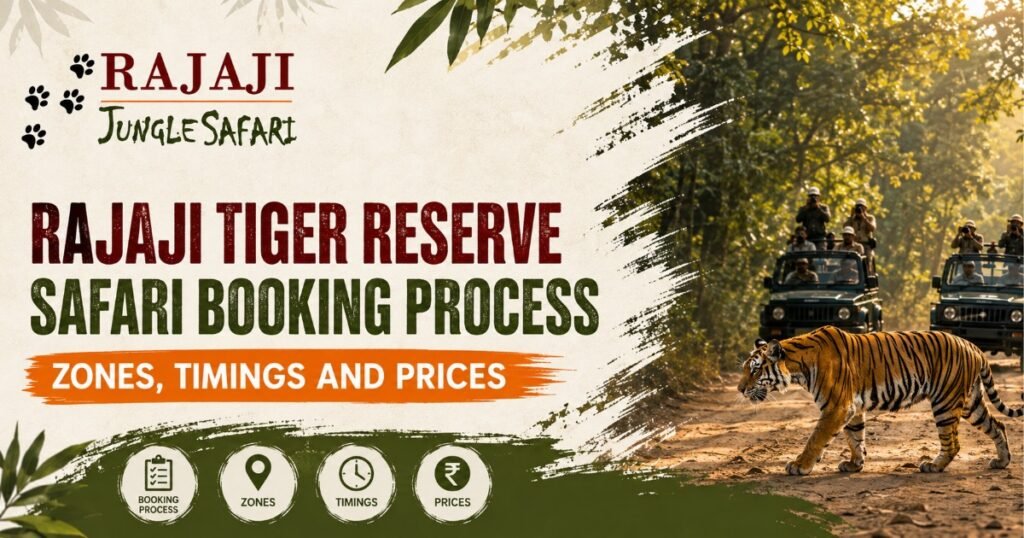
Rajaji Tiger Reserve is home to a growing population of Bengal tigers, though sightings are genuinely less frequent here than at Corbett or Ranthambore. That’s not a downside — it’s simply the nature of a less-visited, more spread-out reserve. Tigers are most often seen in the Chilla zone, particularly along the canal road near the Ganga, where morning safaris tend to offer the best odds. Patient visitors who book multiple safaris across their trip stand a much better chance.
2. Asian Elephant
This is Rajaji’s true icon. With over 500 wild elephants roaming the park, elephant sightings are far more frequent than tiger sightings, and herds are commonly seen crossing riverbeds, grazing in open grassland, or moving through sal forest corridors. Motichur and Ranipur zones are particularly known for strong, consistent elephant movement, making them excellent choices if elephants are your priority on a Rajaji National Park Safari.
3. Leopard
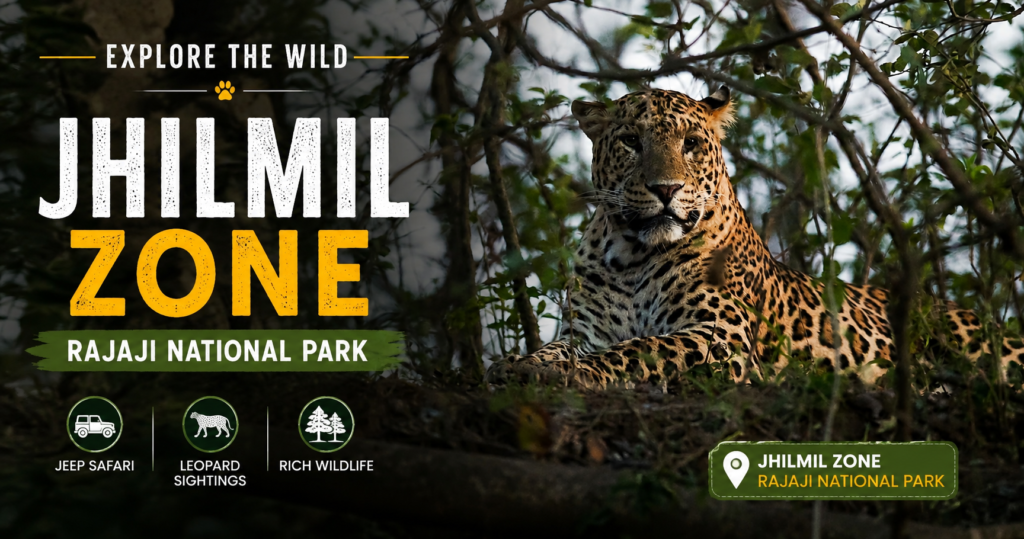
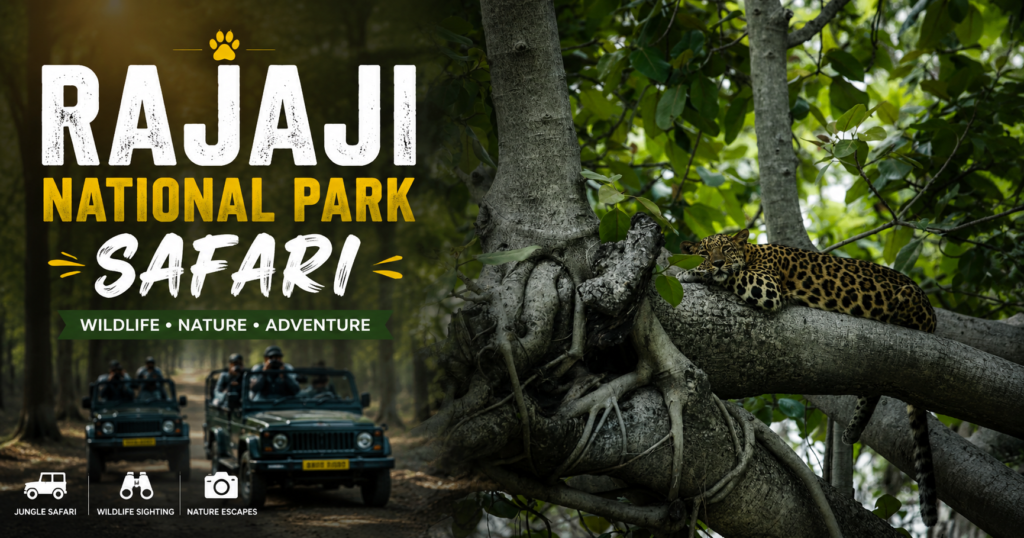
Leopards thrive in Rajaji’s hilly, broken terrain, and the Ranipur zone in particular is considered one of the best places in the entire park to spot one. Because leopards are naturally more elusive and solitary than tigers or elephants, sightings tend to be brief — often just a few seconds before the animal melts back into cover — so keep your camera ready at all times.
4. Sloth Bear
Along with the Himalayan Black Bear, sloth bears inhabit the denser forest tracts of Rajaji. They’re shy, mostly active early morning or late evening, and sightings are less common than the other headline species — but they do happen, especially in quieter zones like Mohand and Gohari/Ramgarh.
5. Swamp Deer (Barasingha)
This is Rajaji’s rarest and most conservation-significant resident. The Jhilmil Jheel wetland reserve is the last remaining habitat of the critically rare Barasingha in Uttarakhand, and a safari here is genuinely your only chance in the state to see this species in the wild. If rare-species spotting matters to you more than a big-cat sighting, this alone makes Jhilmil Jheel worth building your trip around.
Other Mammals You’re Likely to See
Beyond the headline species, a typical Rajaji National Park Jungle Safari regularly turns up:
- Spotted Deer (Chital) — the most common herbivore in the park, seen widely across the flatter terrain in almost every zone
- Barking Deer — common in forest areas with good ground cover
- Sambhar — India’s largest deer species, found in denser forest tracts
- Nilgai (Blue Bull) — frequently spotted in open grassland, especially around Gohari and Ramgarh
- Wild Boar — common along grassland trails and near water sources
- Goral — a small mountain goat species found on the steeper Shivalik slopes
- Jackal and Jungle Cat — both present throughout the park, though more often heard than seen
- Rhesus Macaque and Hanuman Langur — the park’s two primate species, commonly seen along forest roads
- Indian Porcupine and Indian Hare — smaller mammals occasionally spotted at dawn or dusk
- Himalayan Yellow-Throated Marten — a striking, less commonly seen forest carnivore
- Striped Hyena and Small Indian Civet — present but rarely seen due to nocturnal habits
Reptiles and Other Wildlife
Rajaji’s rivers and forest floor host a genuinely interesting reptile population too:
- King Cobra and Indian Cobra — among the more remarkable reptile sightings in the park
- Python — occasionally spotted basking near water bodies, especially around Jhilmil Jheel
- Common Krait
- Monitor Lizard — regularly seen near riverbanks and open ground
The Ganga and Song rivers, which run directly through the park, also support fish species like Mahseer, Trout, Goonch, and Chilwa — a detail that surprises many first-time visitors who don’t expect a “jungle safari” to include riverine wildlife too.
Birdlife: Why Rajaji Is a Birdwatcher’s Paradise
With over 400 recorded bird species — including 151 resident species, 87 migratory species, and dozens of altitudinal and local migrants — Rajaji National Park is genuinely one of North India’s best birdwatching destinations, not just a tiger reserve with birds as an afterthought.
Notable species include:
- Great Hornbill — one of the most sought-after sightings for birders
- Pallas’s Fish Eagle and Crested Serpent Eagle — striking raptors found near riverine and forest habitats
- Mottled Wood Owl
- Kaleej Pheasant, Red Jungle Fowl, and Peafowl — commonly seen ground birds
- Kingfishers, Barbets, and Woodpeckers — frequent sightings across nearly every zone
- Migratory waterfowl — ducks, cormorants, egrets, plovers, and herons arrive in large numbers during winter, particularly around the Ganga and Jhilmil Jheel wetland
If birding is your main goal, Jhilmil Jheel is the standout zone, with over 200 recorded bird species in this wetland alone — and it’s open longer into the season than most other zones because of its conservation status.
Which Rajaji Zone Should You Choose Based on What You Want to See?
Rajaji National Park is divided into six main safari zones, and each one has a genuinely different wildlife strength. Here’s how to match your priorities to the right zone:
| If you want to see… | Best zone |
|---|---|
| Tigers | Chilla Zone |
| Elephants | Motichur or Ranipur Zone |
| Leopards | Ranipur Zone |
| Rare swamp deer (Barasingha) | Jhilmil Jheel |
| Birds | Jhilmil Jheel |
| Nilgai, wild boar & quiet forest | Gohari / Ramgarh Range |
| Hilly terrain & adventure | Mohand Range & Chillawali |
Chilla remains the most popular first choice for a Rajaji National Park Safari thanks to its dense forest, grassy meadows, and the highest combined tiger-and-elephant sighting frequency in the park. But if you’re visiting more than once, spreading your safaris across two or three zones is genuinely the best way to see the full range of what Rajaji has to offer.
Best Time to See Wildlife in Rajaji National Park
- November to February (Peak Season): Cool weather, the clearest overall visibility, and the strongest general wildlife activity across all zones — also peak migratory bird season.
- March to April: Warmer days, newborn animals appearing, and noticeably fewer crowds — a great window for families.
- May to mid-June: Hot, but often the best stretch for serious wildlife photographers, since dry-season waterhole activity draws animals out into the open before the monsoon closure.
The 2026 safari season runs mid-November to mid-June, with morning shifts around 6–9 AM and afternoon/evening shifts around 3–6 PM, shifting slightly by season.
Tips to Maximise Your Wildlife Sightings
- Book more than one safari, in more than one zone — sighting variety comes from covering different terrain, not just repeating the same route.
- Choose morning safaris when possible — early hours tend to offer better activity levels, especially for tigers and elephants.
- Stay quiet in the jeep — sudden noise is the single biggest reason animals disappear before a good sighting.
- Carry binoculars — many of Rajaji’s best sightings, especially birds and distant elephant herds, reward patient, distant observation.
- Go with an experienced naturalist guide — someone who can read pugmarks, alarm calls, and seasonal movement patterns dramatically improves your odds over a generic driver-only safari.
- Wear muted, earthy colours and avoid bright clothing, which can startle wildlife.
Frequently Asked Questions (FAQs)
Q1. What animals can I see on a Rajaji National Park Jungle Safari? Commonly sighted species include Asian elephants, spotted deer, nilgai, and a wide range of birdlife. Bengal tigers, leopards, sloth bears, and the rare swamp deer are seen less often but are regularly recorded across the park’s zones.
Q2. Is tiger sighting guaranteed on a Rajaji National Park Safari? No sighting in a wild forest is ever guaranteed. Rajaji Tiger Reserve has a healthy and growing tiger population, but elephant sightings are far more frequent. Morning safaris in Chilla and Motichur generally offer the best tiger-sighting odds.
Q3. Which zone is best for elephant sightings? Motichur and Ranipur zones are known for the strongest, most consistent elephant movement, while Chilla also sees frequent elephant activity alongside its tiger population.
Q4. Where can I see the rare swamp deer (Barasingha) in Rajaji? The Jhilmil Jheel wetland reserve is the only remaining habitat of the critically rare Barasingha in Uttarakhand, making it the sole place in the state to see this species in the wild.
Q5. Is Rajaji National Park good for birdwatching? Yes. Rajaji records over 400 bird species, and Jhilmil Jheel is the standout zone for birders, with sightings including hornbills, painted storks, and migratory waterfowl in season.
Q6. Which zone is best for leopard sightings? Ranipur Zone is widely considered the best zone in Rajaji National Park for leopard sightings, thanks to its hilly, broken terrain that suits their hunting style.
Q7. What is the best time of year to see the most wildlife? November to February offers the strongest overall wildlife activity and best visibility, while May to mid-June is the top window for photographers thanks to dry-season waterhole activity.
Q8. Do I need a naturalist guide to spot wildlife effectively? Yes, a Forest Department–approved naturalist guide is mandatory on every safari vehicle, and an experienced guide significantly improves your chances by reading pugmarks, alarm calls, and seasonal animal movement.
Conclusion
A Rajaji National Park Safari offers one of the most complete wildlife experiences in North India — tigers, elephants, leopards, sloth bears, the rare swamp deer, and hundreds of bird species, all spread across six genuinely different forest zones. The key to a great trip isn’t luck; it’s choosing the right zone for what you actually want to see, and going with someone who knows the terrain.
That’s exactly what Rajaji Jungle Safari offers — naturalist-led safaris across Chilla, Motichur, Ranipur, Jhilmil Jheel, Mohand, and Gohari/Ramgarh, with transparent 2026 pricing and real-time zone knowledge from a team based right outside the park gates. Visit Rajaji Jungle Safari to plan your Rajaji National Park Jungle Safari and get matched to the zone that fits the wildlife you’re hoping to see.