
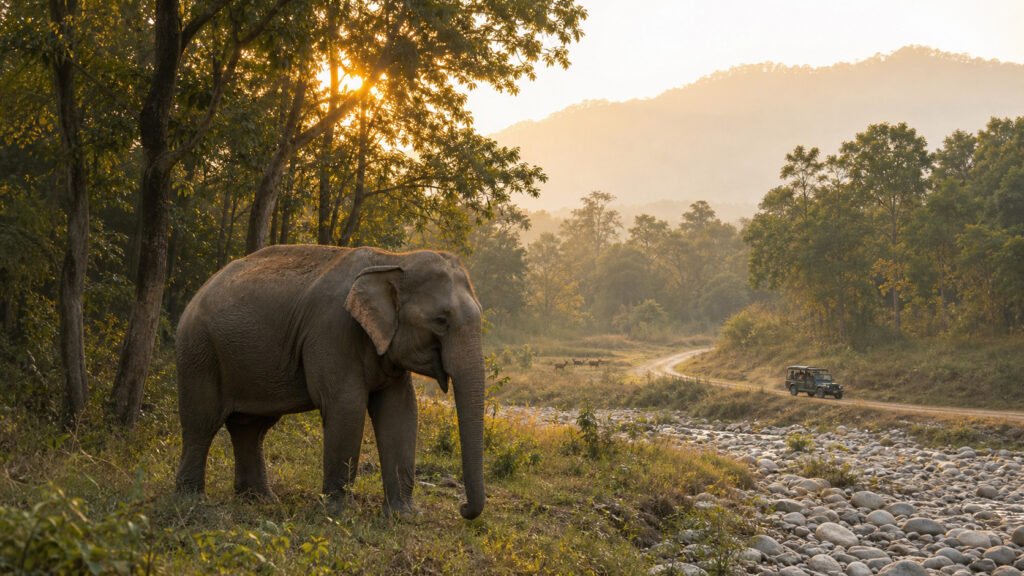
If you’ve been waiting for the monsoon gates of Rajaji National Park to open again, the countdown has already started. The 2026-27 safari season is just around the corner, and if there’s one thing seasoned wildlife travelers know, it’s this: the best slots at Rajaji don’t wait for latecomers. Here’s everything you need to know about when the park reopens, how the booking timeline works, and why registering early can make or break your safari experience.
When Does Rajaji National Park Reopen for 2026-27?
Rajaji National Park follows a fixed seasonal calendar set by the Uttarakhand Forest Department. The park closes every year on June 15 for the monsoon and remains shut for nearly five months while the forest tracks become unsafe and wildlife gets uninterrupted breeding time.
The good news? Rajaji reopens on November 15 for the new safari season. All core zones — Chilla, Motichur, Ranipur, and Mohand — throw open their gates on this date, giving visitors a fresh five-and-a-half-month window (November 15 to June 15) to explore the park’s dense sal forests, riverine grasslands, and some of North India’s best tiger and elephant sighting opportunities.
Keep in mind that these dates can shift by a day or two depending on how the monsoon behaves that year and the Forest Department’s final assessment of trail conditions. It’s always worth checking closer to the date for any last-minute notification, but November 15 has been the standard reopening date for years.
The Jhilmil Jheel Advantage: An Earlier Start
Here’s something most first-time visitors don’t know: Jhilmil Jheel Conservation Reserve opens a full month before the rest of the park, typically around October 15. This 155-hectare wetland zone near Haridwar is a haven for migratory birds and is considered one of North India’s premier birding destinations, hosting over 80 migratory species alongside the resident wildlife.
If you’re eager to get your safari season started early — or you’re specifically a birding enthusiast — Jhilmil gives you a four-week head start over everyone waiting for the main zones to open. It’s also a smart way to beat the November rush, since demand for Chilla and Motichur peaks the moment the season officially begins.
Jhilmil’s season also runs slightly longer at the other end, staying open until June 30, two weeks after the rest of the park closes for monsoon. So if you miss the main season, this zone gives you a bit of extra breathing room too.
Why the Booking Timeline Matters So Much
Rajaji isn’t a park where you can simply show up and expect a jeep waiting for you — at least not during peak months. Understanding the booking rhythm across the season will save you from disappointment:
November to February (Peak Season): This is when Rajaji is at its best — cool weather, high wildlife activity near water sources, and the arrival of migratory birds. It’s also when demand is highest. Chilla and Motichur zone slots can fill up within 24 to 48 hours of opening for popular dates. If you’re planning a visit during these months, book 2 to 3 weeks in advance at minimum. For weekends, holidays, or the first two weeks of the season, consider booking even earlier.
March to April (Spring): Weather turns pleasant, newborn animals start appearing, and predator activity increases. Crowds thin out slightly compared to peak season, so a week’s advance booking is usually sufficient.
May to mid-June (Summer): This period is often overlooked, but it shouldn’t be. As temperatures rise, animals congregate near waterholes, which can actually improve your chances of a tiger or elephant sighting. Slots are far more available here, and 3 to 5 days’ advance booking generally works fine.
Mid-October to mid-November (Jhilmil-only window): Since only one zone is operational, availability is naturally more relaxed, but birding enthusiasts and photography groups do plan ahead for this specific window, so don’t leave it entirely to chance.
What “Advance Registration” Really Means for You
Booking early isn’t just about securing a seat — it’s about securing the right seat. Here’s why registering ahead of the crowd works in your favor:
- Zone and slot choice – Morning safaris (starting around 6:00 AM) consistently show 30-40% higher wildlife sighting probability than evening slots, based on animal activity patterns. Early booking means you get first pick of the morning slot in your preferred zone instead of settling for whatever’s left.
- Date flexibility – If you’re traveling from Delhi, Dehradun, or further afield, you likely have a fixed travel window. Booking ahead means you can align your safari date with your actual travel plans instead of adjusting your trip around leftover availability.
- Group bookings – If you’re traveling with family or a larger group, jeep capacity is limited (typically six persons per vehicle, no sharing allowed). Waiting too long can mean splitting your group across separate jeeps or separate time slots.
- Price stability – While ticket prices don’t fluctuate wildly, waiting until the last moment sometimes limits you to premium or add-on options rather than standard packages.
How to Prepare Right Now
Even though the park is still closed for monsoon, there’s plenty you can do today to get ahead of the November rush:
- Decide which zone matches your priorities — tiger sightings, elephant herds, or birding — so you’re not scrambling to choose once bookings open.
- Keep your identification documents (Aadhaar or Voter ID for Indian nationals, passport for foreign visitors) ready, since these are required at the time of booking.
- Shortlist your preferred dates, keeping weekends and the first two weeks of the season as high-demand periods to plan around carefully.
- Bookmark your safari operator’s booking page so you’re not searching for it when the gates officially open.
Final Thought
Rajaji National Park 2026-27 season brings a fresh chance to witness one of India’s most underrated wildlife landscapes home to over 500 Asian elephants, a growing tiger population, and more than 315 bird species, all within a few hours of Delhi and just minutes from Haridwar and Rishikesh. Whether you’re chasing an early birding trip to Jhilmil in October or planning a peak-season tiger safari for December, the one rule that never changes is simple: plan early, book early. The forest doesn’t wait, and neither should you.
Ready to lock in your dates? Check current zone-wise ticket prices and safari packages, and secure your slot before the season rush begins.
Pingback: How to Reach Chilla Safari Gate from Haridwar Station
Pingback: Private Jeep Safari vs Shared Safari at Rajaji National Park