
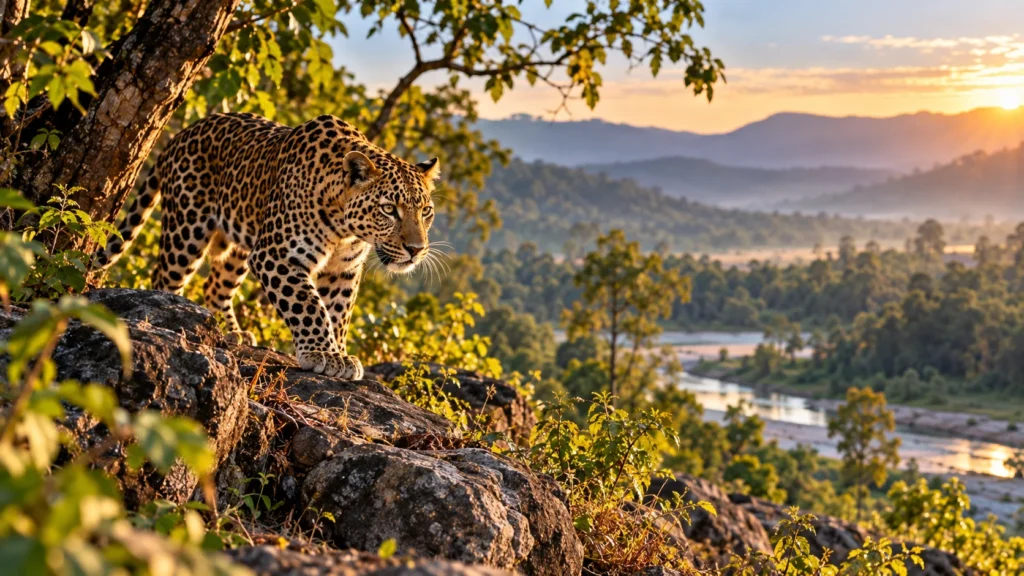
A Rajaji Leopard Photography Safari is an exciting option for wildlife photographers who want to explore the Shivalik landscape of Uttarakhand with a camera ready for elusive wildlife.
Unlike a standard sightseeing safari, a photography-focused safari requires more planning. Your safari zone, timing, number of drives, camera equipment and patience can all affect the quality of your experience.
Rajaji National Park and the wider Rajaji Tiger Reserve support a variety of wildlife habitats, including forest, grassland, rocky terrain and riverine areas. Leopards are among the species found in this landscape, but wildlife sightings are naturally unpredictable.
If your goal is to photograph leopards, the right approach is not to look for a guaranteed sighting. Instead, plan your safari around suitable habitat, multiple drives and experienced guidance.
If you are planning a photography-focused visit, you can also contact our team to discuss available safari options and help with your itinerary.
Plan Your Rajaji Leopard Photography Safari → Contact Us
Why Choose Rajaji National Park for Leopard Photography?
Rajaji offers a different photography experience from many of India’s better-known tiger reserves.
The landscape around the Shivalik hills includes dense forest, rocky stretches, open clearings and seasonal watercourses. These changing habitats create opportunities to photograph different species during the same safari.
For photographers, the attraction is not limited to leopards.
Which Rajaji Safari Zone Should You Choose for Leopard Photography?
Choosing the right safari zone is one of the most important parts of planning your photography trip.
Rajaji has several safari areas and access can vary by season and current forest permissions. Different zones also have different landscapes and routes. For photographers specifically interested in leopards, Motichur and Ranipur are worth discussing when planning your safari.
The correct zone should depend on your travel dates, current zone availability, safari permit availability, where you are staying, number of safari drives and your primary photography interest.
For a broader zone comparison, see Best Rajaji National Park Safari Zone.
Motichur Zone
Motichur has dense sal forest and broken Shivalik terrain. These conditions can create interesting opportunities for wildlife and nature photography.
Its proximity to Haridwar also makes it practical for photographers staying around Haridwar or travelling from nearby areas.
Ranipur Zone
Ranipur provides a more rugged forest landscape with hilly terrain and forest tracks.
For photographers looking specifically for leopard photography, it is one of the zones worth considering when planning a Rajaji safari.
No safari operator can honestly guarantee a leopard sighting or a particular photograph. Wildlife movement depends on natural conditions.
What Makes a Leopard Photography Safari Different?
A normal jungle safari can be about exploring the forest and seeing whatever appears.
A photography safari requires a slightly different mindset.
You may spend considerable time waiting quietly near suitable habitat, watching animal behaviour, looking for movement or alarm calls, tracking wildlife signs, adjusting camera settings and waiting for better light.
Sometimes the best photograph may not be a leopard. A well-composed elephant portrait, deer in morning mist, bird in flight or wildlife silhouette can become one of the strongest images from your trip.
How Many Safaris Should You Plan for Leopard Photography?
If leopard photography is your primary objective, one safari gives you limited opportunities.
Wild animals do not follow a timetable. A leopard may be hidden, moving through dense vegetation or simply outside the safari route during your visit.
For this reason, photographers can consider planning multiple safari drives instead of relying on a single morning.
Multiple drives give you the opportunity to experience different weather conditions, different lighting, different routes, different wildlife activity and morning and evening conditions.
Best Time for Rajaji Leopard Photography Safari
The ideal time depends on what type of photography you want.
Winter mornings can provide softer light, mist and atmospheric forest scenes. This can be particularly useful for landscape and environmental wildlife photography.
As temperatures change through spring, wildlife activity and forest conditions can create different photographic opportunities.
Warmer summer conditions can sometimes make water sources and shaded areas more interesting for wildlife photography, although the heat and harsh light can make photography more challenging.
Rajaji’s regular safari access is seasonal, so always confirm the current opening dates, zone availability and safari timings before planning your trip.
For current opening information, read Is Rajaji National Park Open Now? Safari Season, Dates & Timings.
Camera Gear for a Rajaji Leopard Photography Safari
You do not necessarily need the most expensive camera to enjoy wildlife photography.
A camera with good autofocus and reasonable high-ISO performance can be useful because wildlife photography often involves changing light conditions.
A telephoto lens is one of the most important pieces of equipment for wildlife photography. Depending on your setup, photographers commonly use lenses in the range of 100-400mm, 200-500mm or 150-600mm.
Other useful equipment includes extra batteries, spare memory cards, a lens cleaning cloth, suitable support, binoculars and camera rain or dust protection.
Wildlife Photography Tips for Rajaji
Don’t chase the animal. Good wildlife photography requires patience.
Watch the surroundings. Alarm calls, deer behaviour, bird movement and sudden silence can sometimes provide useful clues that wildlife may be nearby.
Shoot wider sometimes. A close-up animal portrait is attractive, but environmental photographs can tell a better story.
Be ready before the sighting. Wildlife can appear suddenly, so keep your camera settings prepared.
Respect the animal. Never ask a driver to chase, block or disturb wildlife for a photograph.
Rajaji Leopard Photography Safari vs Regular Safari
A regular safari is generally about exploring the forest and experiencing wildlife. A photography safari is planned around photographic opportunities, camera preparation, multiple drives and observation time.
What Can You Expect From a Rajaji Leopard Safari?
The most important thing to understand is that wildlife photography cannot be guaranteed.
You may spend hours in the forest without seeing a leopard and still return with excellent photographs of other wildlife and landscapes.
On another drive, a leopard may appear briefly and give you only a few seconds to photograph it. That unpredictability is part of wildlife photography.
Our role is to help you plan the safari properly, select suitable options based on current availability and make the most of the time you have inside the forest.
You can also explore Animals You Can See on Rajaji National Park Safari.
How to Book a Rajaji Leopard Photography Safari
Planning a photography safari is easier when you decide the important details before booking.
Have your preferred travel dates, number of people, number of safari drives, primary photography interest, preferred starting location and camera requirements ready.
Safari availability and access can change with season and forest permissions, so confirm the details before making travel arrangements.
Read the step-by-step How to Book Rajaji National Park Safari Online guide.
You can also see How Early Should You Book a Rajaji National Park Safari?.
Planning a Rajaji Leopard Photography Safari With Us?
If you are looking for a Rajaji Leopard Photography Safari rather than a standard sightseeing trip, contact us with your travel dates and requirements.
We can discuss available safari dates, suitable safari zones, number of safari drives, photography-focused itinerary, group size, accommodation requirements, pickup and local travel options and current safari availability.
Final Thoughts
A Rajaji Leopard Photography Safari is about much more than trying to photograph one animal.
The combination of Shivalik landscapes, forest habitats, changing light and unpredictable wildlife makes every drive different.
If leopard photography is your priority, plan your trip around the right zone, multiple safari opportunities, suitable equipment and realistic expectations.
Tell Us Your Dates. We’ll Help You Plan the Safari.
Travel Date: __________
Number of People: __________
Photography Focus: Leopard / Wildlife / Birds / General
Starting From: Haridwar / Rishikesh / Dehradun / Other
WhatsApp / Call: +91 99176 06031
WhatsApp Us to Plan Your Rajaji Leopard Photography Safari
Frequently Asked Questions
Is Rajaji National Park good for leopard photography?
Rajaji supports leopard habitat across its forest landscape, and areas such as Motichur and Ranipur are worth considering for a leopard-focused safari. However, leopard sightings are unpredictable and cannot be guaranteed.
Which Rajaji zone is suitable for leopard photography?
Motichur and Ranipur are two areas worth considering for a leopard-focused photography plan. The final choice should depend on current access, safari availability, your travel base and the purpose of your trip.
Can I guarantee a leopard sighting?
No. A responsible safari operator should never guarantee a wild animal sighting.
How many safaris should I book for leopard photography?
If leopard photography is your main objective, multiple drives generally provide more opportunities than relying on a single safari.
What lens should I carry?
A telephoto lens such as a 100-400mm, 200-500mm or 150-600mm can be useful, depending on your camera system and photography style.
Can beginners join a leopard photography safari?
Yes. You do not need to be a professional photographer. A photography-focused safari can work for beginners as well as experienced wildlife photographers.
Can I contact you for a customized photography safari?
Yes. Send your travel dates, number of people and photography requirements, and we can discuss the available safari options.