
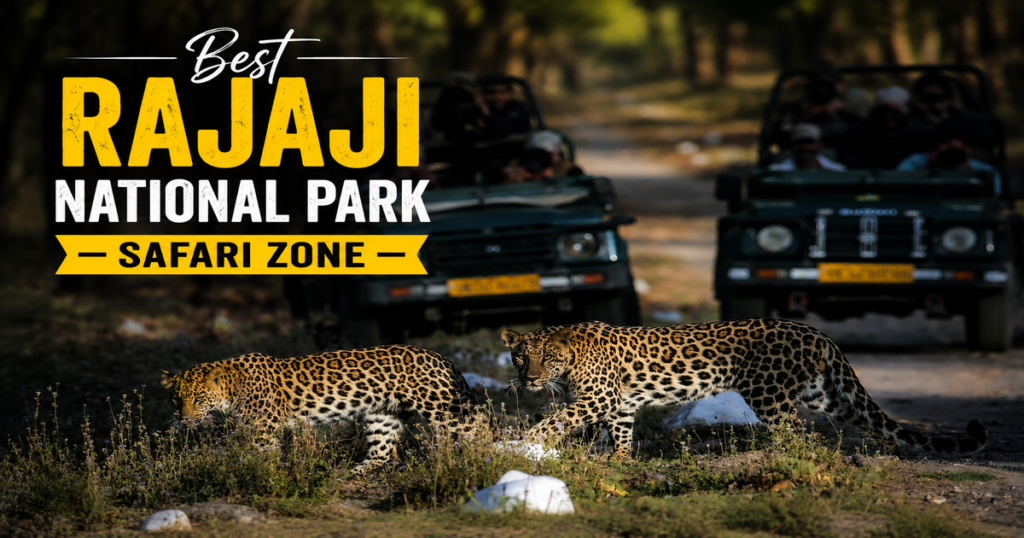
If you’re planning a trip to Uttarakhand in 2026 and searching for the best Rajaji National Park Safari, you’ve probably noticed the park isn’t just one single entry point — it’s split into several distinct zones, each with its own terrain, wildlife, and personality. So which one should you actually book?
The short answer: it depends on what you want to see. A Rajaji National Park Jungle Safari in the Chilla zone gives you the best odds for tigers and elephants, while Ranipur and Motichur are better for leopards, and Jhilmil is unmatched for birdlife and the rare Barasingha deer. This guide breaks down every zone in detail so you can pick the right one for your 2026 trip — no guesswork required.
Quick Answer: Best Zone by Sighting Goal
For readers short on time, here’s the direct answer before we go deeper:
- Best for tiger sightings: Chilla Zone
- Best for leopard sightings: Ranipur Zone
- Best for elephant herds: Chilla and Motichur Zones
- Best for birdwatching: Jhilmil Zone
- Best for rare species (Barasingha): Jhilmil Zone
- Best for last-minute or budget safaris: Mohand Zone
- Best overall for first-time visitors: Chilla Zone
- Best for quiet, low-crowd safaris: Ranipur and Jhilmil Zones
Now let’s look at why each of these zones earns its reputation, and how to choose the right one for your Rajaji National Park Safari in 2026.
Overview of Rajaji National Park’s Safari Zones
Rajaji National Park spans more than 820 sq. km across Haridwar, Dehradun, and Pauri Garhwal districts in Uttarakhand, and was formally declared a Tiger Reserve in 2015. Rather than one continuous safari route, the park is divided into five main public zones — Chilla, Motichur, Ranipur, Jhilmil, and Mohand — each accessed through a separate gate and offering a different mix of terrain and wildlife.
This zonal structure is actually good news for visitors. It means you can match your safari to your specific interest — tigers, leopards, elephants, or birds — instead of hoping for a random sighting on a generic tour. Understanding these differences is the single most important thing that separates a forgettable safari from a genuinely memorable one.
Chilla Zone: Best for Tigers & Elephants
If your main goal for a Rajaji National Park Jungle Safari is spotting a tiger, Chilla is where you should start. It’s the largest and most established zone in the park, running along the banks of the Ganga River, and it consistently records the highest tiger density among all Rajaji zones.
Why Chilla stands out:
- Highest tiger population density in the park
- Large resident elephant herds, especially near the river and grasslands
- Well-developed tourism infrastructure, with more gypsies and better-marked trails
- Widest range of habitats in one zone — riverine forest, grassland, and dense sal forest
The trade-off: Chilla is also the most popular zone, meaning more gypsies on the trail and a busier overall experience, especially during peak winter weekends. If crowd-free wildlife viewing matters more to you than raw sighting odds, keep reading — Ranipur and Jhilmil might be a better fit.
Motichur Zone: Best for Leopards & Airport Access
The Motichur zone sits closest to Dehradun and Jolly Grant Airport, making it the most convenient starting point for travelers flying in. But convenience isn’t its only strength — Motichur is also widely regarded as one of the best zones in the park for leopard sightings, thanks to its rocky outcrops and elephant migration corridors.
Why Motichur stands out:
- Closest zone to Dehradun and the airport — ideal for short trips
- Strong leopard territory, especially near rocky terrain
- Key elephant corridor connecting to the wider Rajaji-Corbett landscape
- Noticeably quieter than Chilla, with fewer gypsies per safari slot
This makes Motichur a smart pick if your trip is centered around Dehradun or Rishikesh and you want a genuine chance at leopard sightings without the Chilla crowds.
Ranipur Zone: Best for Leopard Density & Quiet Terrain
If leopards are truly your priority, Ranipur edges out even Motichur. Sitting on the western edge of the park near Haridwar, Ranipur offers the most varied terrain of any zone — hilly stretches, riverbeds, open grassland, and dense forest — and some operators quote leopard sighting probabilities here as high as 70-75%.
Why Ranipur stands out:
- Highest reputation for leopard density in the entire park
- Diverse terrain within a single safari route
- Among the least crowded zones, making it excellent for a peaceful, unhurried safari
- Great for last-minute bookings, since it rarely sells out compared to Chilla or Motichur
For photographers and serious wildlife enthusiasts who’ve already done a “standard” tiger safari elsewhere and want something different, Ranipur consistently delivers a wilder, more intimate Rajaji National Park Safari experience.
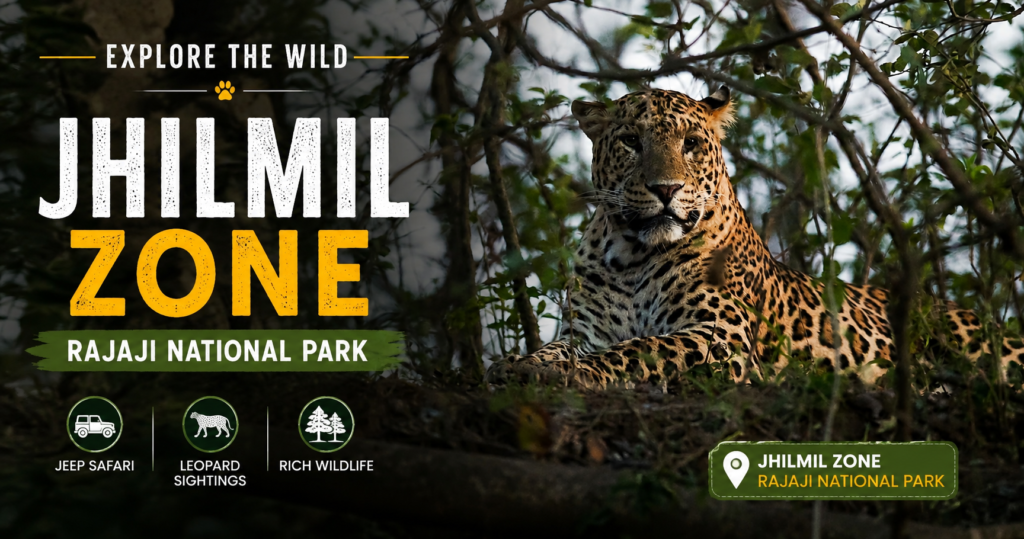
Jhilmil Zone: Best for Birds & Rare Barasingha
Jhilmil is unlike every other zone in Rajaji, and that’s exactly what makes it worth including in your 2026 plans. Instead of dense forest, this 155-hectare wetland reserve is built around marshy grasslands and seasonal water channels (“tals”), making it the only home in Uttarakhand for a surviving herd of Barasingha (swamp deer).
Why Jhilmil stands out:
- The only place in Uttarakhand to see wild Barasingha
- Over 300 recorded bird species, with migratory activity peaking November to March
- Extremely low daily permit numbers (historically around 15 per shift), keeping it genuinely quiet
- Extended safari season, often open until June 30 — two weeks longer than other zones
If your idea of a great Rajaji National Park Jungle Safari is slow, observational, and centered on rare species rather than a race to spot a big cat, Jhilmil should be near the top of your 2026 list.
Mohand Zone: Best for Last-Minute & Budget Safaris
Mohand is the least talked-about zone in Rajaji, but it deserves a mention here for a simple reason: it’s almost always available, even when other zones are fully booked. Located toward the southern part of the reserve, Mohand offers a solid mix of general wildlife sightings without the premium pricing or advance-booking pressure of Chilla.
Why Mohand stands out:
- Reliable last-minute availability, even during peak season
- Lower overall demand means a calmer, less commercialized experience
- Good general wildlife activity — deer, wild boar, and occasional big cat sightings
- Often more budget-friendly for group bookings
If your travel dates are flexible or last-minute, Mohand is a practical backup that still delivers a genuine forest experience.
Comparison Table: All Zones Side-by-Side
| Zone | Best For | Crowd Level | Ideal Visitor |
|---|---|---|---|
| Chilla | Tigers & elephants | High | First-time visitors, tiger seekers |
| Motichur | Leopards, airport access | Moderate | Dehradun-based travelers |
| Ranipur | Highest leopard density | Low | Photographers, repeat visitors |
| Jhilmil | Birds & Barasingha | Very low | Birders, quiet-safari seekers |
| Mohand | Last-minute/budget trips | Low | Flexible travelers |
This kind of side-by-side comparison is exactly what to keep in mind when deciding which zone fits your specific 2026 travel goals — there’s no single “best” zone for everyone, only the best zone for your priorities.
Best Time to Visit Rajaji National Park in 2026
Across all zones, Rajaji National Park stays open for safaris from November 15 to June 15 each year (with Jhilmil extending to June 30). Within this window:
- November to February: The most popular season, with cool weather, clear visibility, and strong overall wildlife activity across every zone.
- March to April: Pleasant temperatures with good sightings as water sources shrink and animals move more visibly toward remaining streams.
- May to mid-June: Hot, but often the best window for sightings near waterholes, especially for tiger and elephant activity in Chilla and Motichur.
Winter remains the safest overall choice for a first-time Rajaji National Park Jungle Safari, but serious photographers often prefer the pre-monsoon summer months for dramatic waterhole action.
How to Book Your Rajaji National Park Safari
Regardless of which zone you choose, the booking process follows a similar pattern:
- Decide your priority zone based on what you want to see — tigers, leopards, birds, or a flexible last-minute option.
- Pick your preferred date and shift (morning or evening) — high-demand zones like Chilla should be booked well in advance, especially in peak winter.
- Submit visitor details and ID proof for everyone in your group (Aadhaar/Voter ID for Indians, passport for foreign nationals).
- Complete payment and receive your forest permit, gypsy, and guide confirmation ahead of your visit.
- Arrive at the correct gate at least 20-30 minutes before your slot for permit verification.
Because permit numbers, timings, and pricing vary slightly by zone and season, working with a local team that tracks real-time availability across all five zones makes it far easier to lock in the right slot instead of guessing which zone still has openings.
Frequently Asked Questions (FAQs)
Q1. Which zone in Rajaji National Park has the best tiger sightings? Chilla Zone has the highest tiger density in the park and is generally considered the best choice for a Rajaji National Park Safari focused on tiger sightings.
Q2. Which zone is best for leopard sightings in 2026? Ranipur Zone has the strongest reputation for leopard density, with Motichur Zone close behind as a great alternative near Dehradun.
Q3. Which Rajaji zone is best for birdwatching? Jhilmil Zone is the top choice for birders, with over 300 recorded species and peak migratory activity between November and March.
Q4. Is there a zone in Rajaji National Park good for last-minute bookings? Yes — Mohand and Ranipur zones are generally more available for last-minute bookings compared to the high-demand Chilla and Motichur zones.
Q5. What is the best overall zone for a first-time visitor? Chilla Zone is usually recommended for first-timers because of its well-developed infrastructure, wide habitat variety, and strong overall wildlife density.
Q6. When is the best time for a Rajaji National Park Jungle Safari in 2026? November to February offers the most comfortable weather and reliable sightings, though March to June can offer excellent waterhole activity, especially in Chilla and Motichur.
Q7. Can I visit more than one zone during my Rajaji trip? Yes, many visitors combine two zones in one trip — for example, a tiger-focused morning safari in Chilla followed by a birding-focused Jhilmil safari the next day.
Q8. Do all zones in Rajaji National Park have the same safari season? Most zones run from November 15 to June 15, except Jhilmil, which stays open two extra weeks until June 30 due to its wetland conservation status.
Conclusion
There’s no single “best” zone in Rajaji National Park — the right choice depends entirely on what you want your 2026 safari to deliver. Chilla remains the top pick for tiger and elephant sightings, Ranipur and Motichur lead for leopards, Jhilmil is unmatched for birds and rare Barasingha, and Mohand is your reliable backup for flexible, last-minute trips.
Whichever zone matches your goals, planning the right permit, gypsy, and guide in advance makes all the difference between an average outing and a truly memorable Rajaji National Park Jungle Safari. If you’d like local, expert help choosing the right zone and locking in your 2026 slot, Rajaji Jungle Safari can plan the entire experience for you — from permits to pickup — so all you need to do is show up and watch the forest come alive.

Pingback: How to Book a Rajaji Wildlife Photography Safari