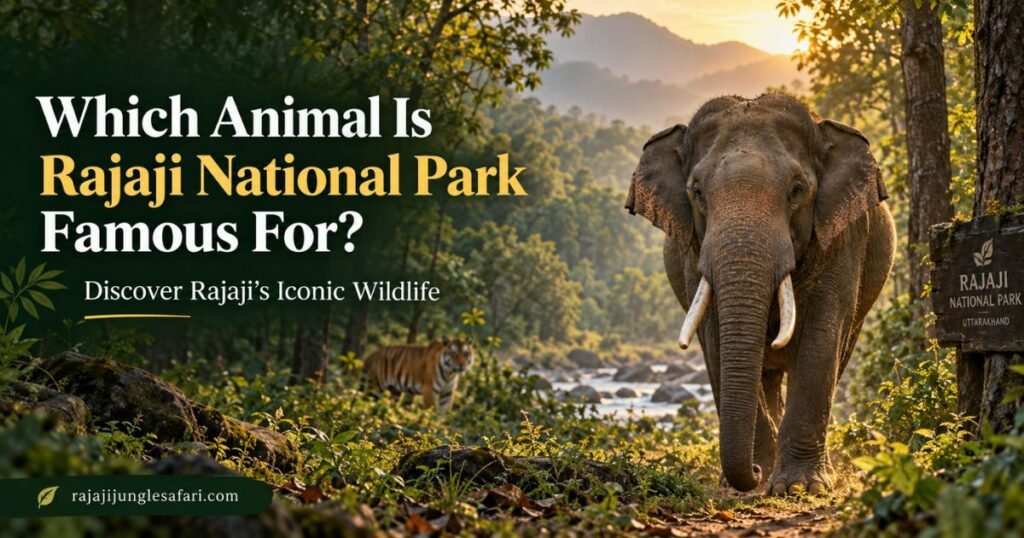
If you’re planning a jungle safari and wondering which animal Rajaji National Park is famous for, the short answer is the wild Asian elephant. Rajaji is home to one of North India’s largest wild elephant populations, with over 500 elephants moving through its sal forests, grasslands and riverine belts. Alongside the elephants, Rajaji is also officially a Tiger Reserve — India’s 48th, declared in 2015 — so Bengal tigers share the spotlight as the park’s other signature species.
In short: elephants are what Rajaji is best known for, tigers are what make it a reserve of national importance. Together, they define what a Rajaji jungle safari is all about.
Why Rajaji Is an Elephant Stronghold
Rajaji National Park spans roughly 820 sq km of Shivalik forest across Haridwar, Dehradun and Pauri Garhwal. This landscape — sal forest, open grassland and the Ganga’s riverbelt — forms a natural corridor that elephant herds have used for generations to move between forest patches across the wider Shivalik range.
That corridor is now the focus of the ongoing Rajaji-Raghati Biosphere initiative, a 2026 conservation effort aimed at protecting the elephant movement route connecting Rajaji to the surrounding forest landscape. It’s one of the reasons elephant sightings here are so consistent compared to many other Indian parks — you’re not just visiting a reserve, you’re driving through a working migration corridor.
Visitors on a Rajaji safari regularly spot elephant herds near water sources during the early morning shift, particularly in zones known for strong elephant movement.
Rajaji’s Tiger Reserve Status
Rajaji was formed in 1983 by merging the Chilla, Motichur and Rajaji wildlife sanctuaries, and it took a major step up in 2015 when it was declared India’s 48th Tiger Reserve. Since then, the park’s tiger population has been steadily growing, with the Chilla Zone recording the highest tiger-sighting frequency in the reserve.
Tiger sightings are less frequent than elephant sightings — no wildlife encounter in a genuinely wild forest is guaranteed — but Rajaji’s growing numbers and improving habitat management mean the odds keep getting better each season, especially on morning safaris during peak season (November to February).
Other Wildlife You Can Spot
While elephants and tigers are the headline names, Rajaji’s ecosystem supports a wide range of other species worth watching for:
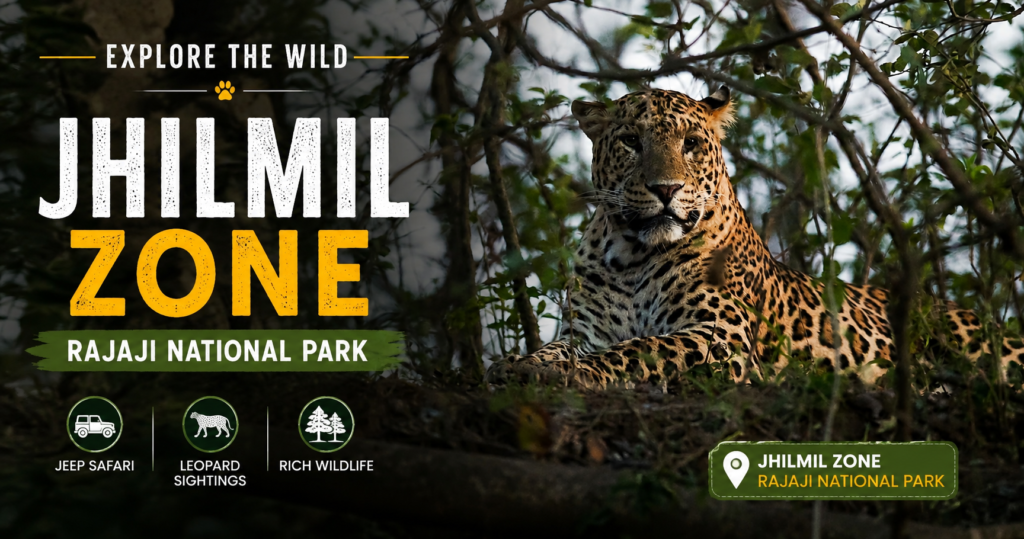
- Leopards — spotted across several zones, though more elusive than tigers
- Sloth bears — occasional sightings in denser forest patches
- Spotted deer and nilgai — commonly seen on almost every safari
- Swamp deer — a rare and protected species found specifically at Jhilmil Jheel
- 400+ bird species, including the Great Hornbill, painted storks and seasonal migratory waterfowl
This mix of large mammals and rich birdlife is part of why Rajaji has become a favourite for both wildlife photographers and birdwatchers, not just tiger-focused visitors.
Best Zones and Times to Spot Rajaji’s Famous Wildlife
Rajaji has six main safari zones, and each one leans toward a different kind of sighting:
| Zone | Best For |
|---|---|
| Chilla Zone | Highest tiger and elephant sighting frequency in the park |
| Motichur Zone | Strong, consistent elephant movement through sal woodland |
| Ranipur Zone | Reliable elephant corridors, quieter and less crowded |
| Jhilmil Jheel | Swamp deer and birdwatching, 200+ species recorded here alone |
| Mohand Range | Leopard and hilly-terrain sightings for adventure seekers |
| Gohari & Ramgarh | Leopard, nilgai and wild boar in peaceful Sal forest |
Best time to visit: The safari season runs mid-November to mid-June.
- November–February — peak wildlife activity and the best overall visibility for both tigers and elephants
- March–April — warmer days, newborn animals, and noticeably fewer crowds
- Late May–mid-June — dry-season waterhole activity draws animals into the open, a favourite window for photographers
FAQs
Is Rajaji National Park known for tigers or elephants?
Both, but elephants are what the park is most famous for, with over 500 wild Asian elephants recorded. Rajaji is also India’s 48th Tiger Reserve, so tigers are a major draw as well.
How many elephants live in Rajaji National Park?
The park is home to more than 500 wild Asian elephants, making it one of North India’s most significant elephant habitats.
Is a tiger sighting guaranteed on a Rajaji safari?
No — sightings in any wild forest can never be guaranteed. That said, Rajaji’s tiger population is healthy and growing, and elephant sightings are considerably more frequent than tiger sightings.
Which zone is best for spotting Rajaji’s famous animals?
Chilla Zone offers the best combined odds for both tigers and elephants. For a quieter, elephant-focused safari, Motichur and Ranipur are excellent choices.
Ready to see Rajaji’s elephants and tigers for yourself? Book your 2026 Rajaji National Park jungle safari with a local naturalist-led team — real-time zone availability, transparent pricing, and confirmation within the hour on WhatsApp.