
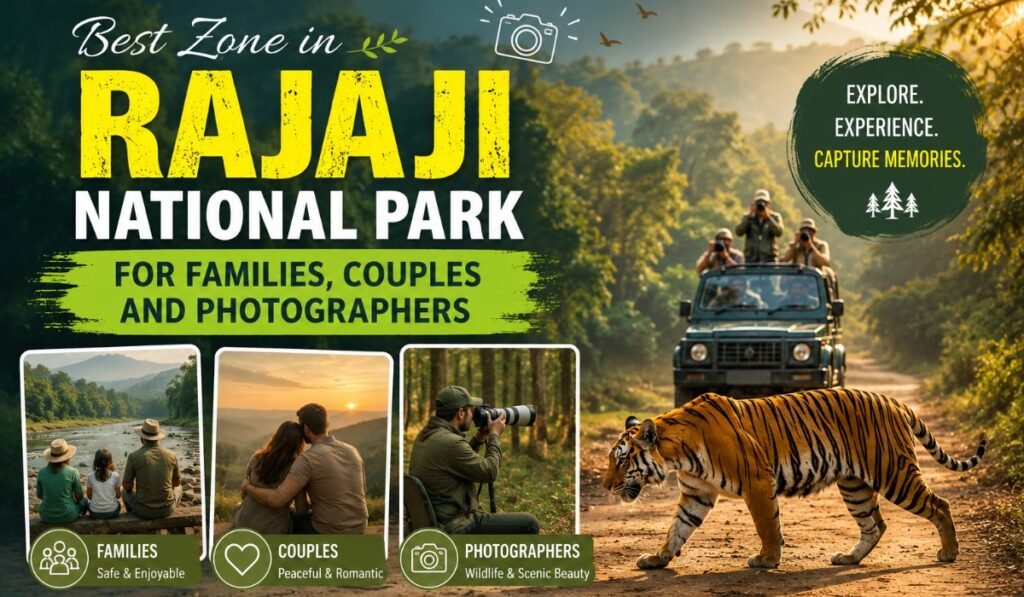
Rajaji National Park, also known as Rajaji Tiger Reserve, spans roughly 820 sq km across Haridwar, Dehradun, and Pauri Garhwal districts in Uttarakhand. It became India’s 48th Tiger Reserve, formed by merging three earlier sanctuaries, and today shelters Bengal tigers, Asian elephants, leopards, sloth bears, and over 300 recorded bird species across Sal forests, grasslands, and river-fed terrain.
Unlike single-gate parks, Rajaji operates through multiple distinct Rajaji National Park safari zones, each booked separately and each offering a different wildlife experience. This guide walks through every zone, what to expect, and how to plan your safari around it.
What Are the Safari Zones in Rajaji National Park?
Rajaji National Park safari zones: Chilla, Motichur, Ranipur, Jhilmil Jheel, Gohri, Mohand, and Ramgarh. Chilla and Motichur are the most popular for tiger and elephant sightings, Jhilmil is best for birdwatching, and Gohri is the only zone open through the monsoon.
Chilla Zone
Chilla is Rajaji’s most visited and most productive zone for tiger sightings, spread across dense forest, open meadows, and perennial river stretches. Safari drives here commonly turn up tigers, leopards, wild boar, and well over a hundred recorded bird species including hornbills and woodpeckers. Its gate sits close to both Haridwar and Rishikesh, which is a big part of why it fills up fastest once bookings open.
Best for: Tiger sightings, first-time visitors, shorter travel time from Haridwar/Rishikesh.
Motichur Zone
Motichur offers a 20-25 km safari through thick Sal forest and dry riverbeds. Along with tigers, leopards, and elephants, the zone is known for sambar, nilgai, wild boar, and strong birdlife including hornbills. Its forest cover is noticeably denser than Chilla’s, making it a favorite for visitors who want a more immersive forest drive.
Best for: Leopard and tiger sightings, dense-forest photography, a quieter safari pace.
Ranipur Zone
Ranipur, near Haridwar, is built around thick forest, open grassland, and reliable water sources — exactly the habitat elephants need. The zone plays an important role in elephant corridor protection, giving visitors a strong chance of seeing herds move naturally through the landscape.
Best for: Elephant sightings, conservation-focused visits.
Jhilmil Jheel Range
Jhilmil is where forest meets wetland. This mix of lakes and greenery draws species like the spot-billed duck, painted stork, Indian roller, crested serpent eagle, and kingfishers, making it Rajaji’s standout zone for birding and wetland photography.
Best for: Birdwatching, wetland photography, a calmer, scenic safari.
Mohand Range
Accessible via the Saharanpur-Dehradun highway, Mohand runs a longer, roughly 35-km safari route through forest and hills, with sightings of leopards, elephants, tigers, deer, and 300+ bird species. Its hilly terrain also supports hiking, camping, and picnicking beyond the safari itself.
Best for: Dehradun-based travelers, longer safaris, combined adventure activities.
Ramgarh Range
Ramgarh, near Dehradun, is one of Rajaji’s quieter entry points, wrapped in dense Sal forest and home to elephants, leopards, deer, nilgai, monkeys, and wild boar. Its lower visitor traffic makes it appealing to nature photographers who prefer a slower, less crowded drive.
Best for: Off-the-beaten-path safaris, photography without crowds.
Rajaji National Park: Quick Reference
| Zone | Known For | Nearest City |
|---|---|---|
| Chilla | Tigers, elephants, high sighting rate | Haridwar / Rishikesh |
| Motichur | Tigers, leopards, dense forest | Haridwar / Rishikesh |
| Ranipur | Elephant corridor | Haridwar |
| Jhilmil Jheel | Birdwatching, wetland species | Haridwar |
| Gohri | Year-round access, monsoon safaris | Dehradun side |
| Mohand | Longer safari, hills, camping | Dehradun |
| Ramgarh | Quiet, less-visited forest | Dehradun |
Safari season: Mid-November to mid-June (Gohri stays open year-round) Typical timings: Morning 6:00-9:00 AM, Evening 3:00-6:00 PM Entry fee: Approx. ₹150/person (Indians), ₹600/person (foreigners); vehicle and guide charges extra Private vehicles: Not permitted — all safaris run in designated 4×4 vehicles with a forest-approved guide
Frequently Asked Questions
Which zone is best for tiger spotting in Rajaji National Park?
Chilla and Motichur are the two zones most consistently associated with tiger sightings.
Can I visit Rajaji National Park during the monsoon?
Most zones close from mid-June to mid-November, but Gohri Range remains open year-round.
Are private vehicles allowed on safari?
No. All safaris use forest department-approved 4×4 vehicles with a guide.
Do I need to book a safari in advance?
Yes — advance booking is strongly recommended, especially for Chilla and Motichur during peak season, as slots fill quickly.
Which zone is best for birdwatching?
Jhilmil Jheel Range, thanks to its wetland habitat and resident and migratory bird species.