
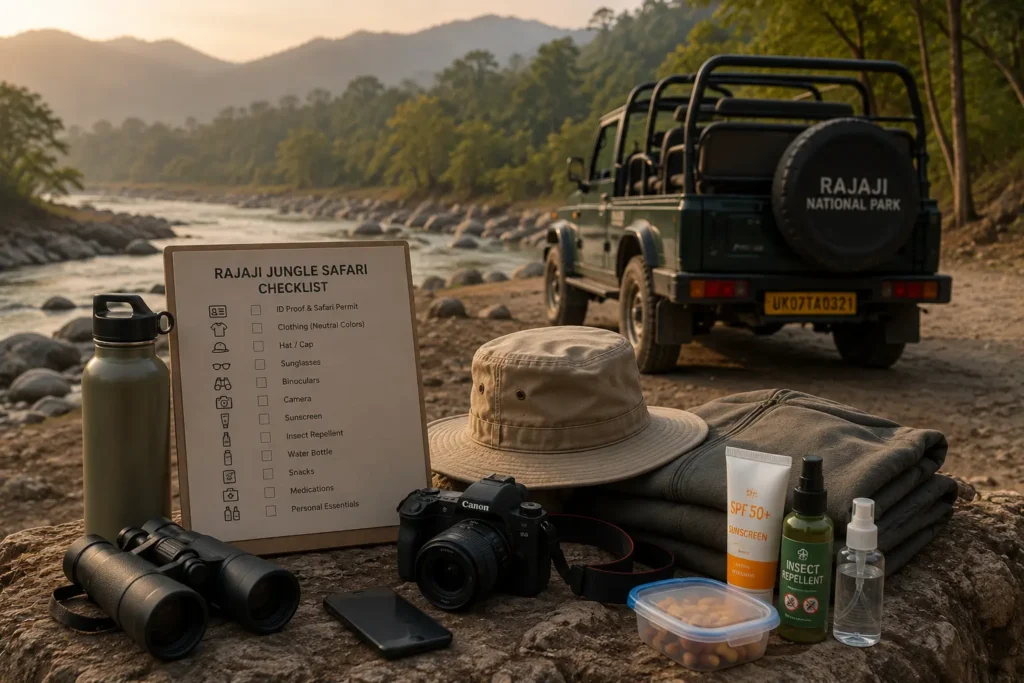
There’s nothing worse than sitting in a jeep at 6 AM, engine running, and realizing you forgot your binoculars in the hotel room. A jungle safari is a bit different from a regular sightseeing trip. What you wear and carry can genuinely affect how much you enjoy the experience, and in some cases, how many animals you actually get to see. Here’s a complete, practical checklist for your Rajaji National Park safari.
What to Wear
Stick to neutral, earthy colors. Think khaki, olive, brown, beige, or muted green. These colors blend into the forest and don’t startle wildlife the way bright colors do. Avoid white, red, yellow, or anything fluorescent. It’s not just about aesthetics; animals notice sudden flashes of bright color far more than you’d think.
Dress in layers. Winter mornings at Rajaji (November through February) can be surprisingly cold, especially in the open jeep with wind hitting you at speed. Temperatures can be in single digits at sunrise and climb quickly once the sun is up. A light jacket or fleece you can remove as the day warms up works best.
Full sleeves and full-length pants. Even in summer, this protects you from branches, insects, and sunburn during the open-air ride. Avoid shorts and sleeveless tops regardless of the season.
Comfortable, closed shoes. Sneakers or trekking shoes work well. Avoid sandals or flip-flops. Jeep safaris can get bumpy, and closed shoes protect your feet if you step out at any designated point.
A cap or hat with a strap. The jeep moves fast enough that an unsecured hat will end up on the forest floor within the first ten minutes. A cap also helps with sun glare during morning and afternoon slots.
What to Carry
Binoculars. This is probably the single most valuable item you can bring. Many animals, especially birds and distant elephants, are best spotted with binoculars rather than the naked eye. If you don’t own a pair, it’s worth borrowing or renting one before your trip.
A camera with a zoom lens. Phone cameras struggle with distance and movement in low light. If wildlife photography matters to you, a DSLR or mirrorless camera with at least a 200mm lens will make a noticeable difference. Do check ahead whether your safari operator charges a separate camera fee, since many reserves in India do.
Extra camera batteries and memory cards. Cold mornings drain batteries faster than usual, and there’s nothing more frustrating than running out of storage right when a tiger walks into view.
A small backpack or sling bag. Something compact that doesn’t take up much space in the jeep but keeps your essentials within reach.
Water bottle. Safaris typically run two to three hours, and there are no shops inside the reserve. Carry enough water, especially for summer slots.
Light snacks. A few energy bars or biscuits are useful, particularly for early morning safaris when you head out before breakfast. Avoid anything with strong smells or loud packaging.
Sunscreen and sunglasses. Even in winter, the sun can be intense during mid-morning safaris. A broad-spectrum sunscreen and polarized sunglasses help, especially near open water bodies where glare increases.
Insect repellent. Useful year-round, but especially important just after monsoon season when insect activity is higher.
Valid ID proof. Aadhaar card or Voter ID for Indian nationals, and a passport for foreign visitors. This is mandatory at the time of entry, not optional, so keep it easily accessible rather than buried in a suitcase.
A printed or digital copy of your booking confirmation. Forest checkpoints often ask for this before allowing entry.
What to Leave Behind
Perfumes and strong deodorants. Wild animals have a far sharper sense of smell than humans, and strong scents can alert them to your presence well before you’re close enough to see anything.
Bright or flashy clothing and accessories. This includes shiny jewelry, which can catch sunlight and cause reflections.
Speakers or any device that plays sound. Silence isn’t just courtesy inside the reserve, it’s often required by forest rules, and unnecessary noise reduces everyone’s chances of a good sighting.
Plastic bags and disposable plastic items. Most reserves in Uttarakhand, including Rajaji, restrict single-use plastic. Carry a reusable bottle and avoid packaged snacks wrapped heavily in plastic.
Drones. Unless you have specific prior permission from the Forest Department, drones are not allowed inside protected reserves.
A Quick Pre-Safari Checklist
Before you leave for your safari, do a final check:
- ID proof and booking confirmation
- Neutral-colored, full-sleeve clothing and closed shoes
- Binoculars and camera with charged batteries
- Water and light snacks
- Sunscreen, cap, and sunglasses
- Insect repellent
- No perfume, no bright colors, no loud devices
Final Thought
A little preparation goes a long way on a jungle safari. The forest doesn’t wait for you to fix a wardrobe mistake or dig through your bag for a missing item, and the best sightings often happen in a matter of seconds. Pack smart, dress right, and you’ll spend your safari watching the wilderness instead of worrying about what you forgot.
Ready to book your Rajaji jungle safari? Check current zone-wise packages and safari timings to plan your visit.